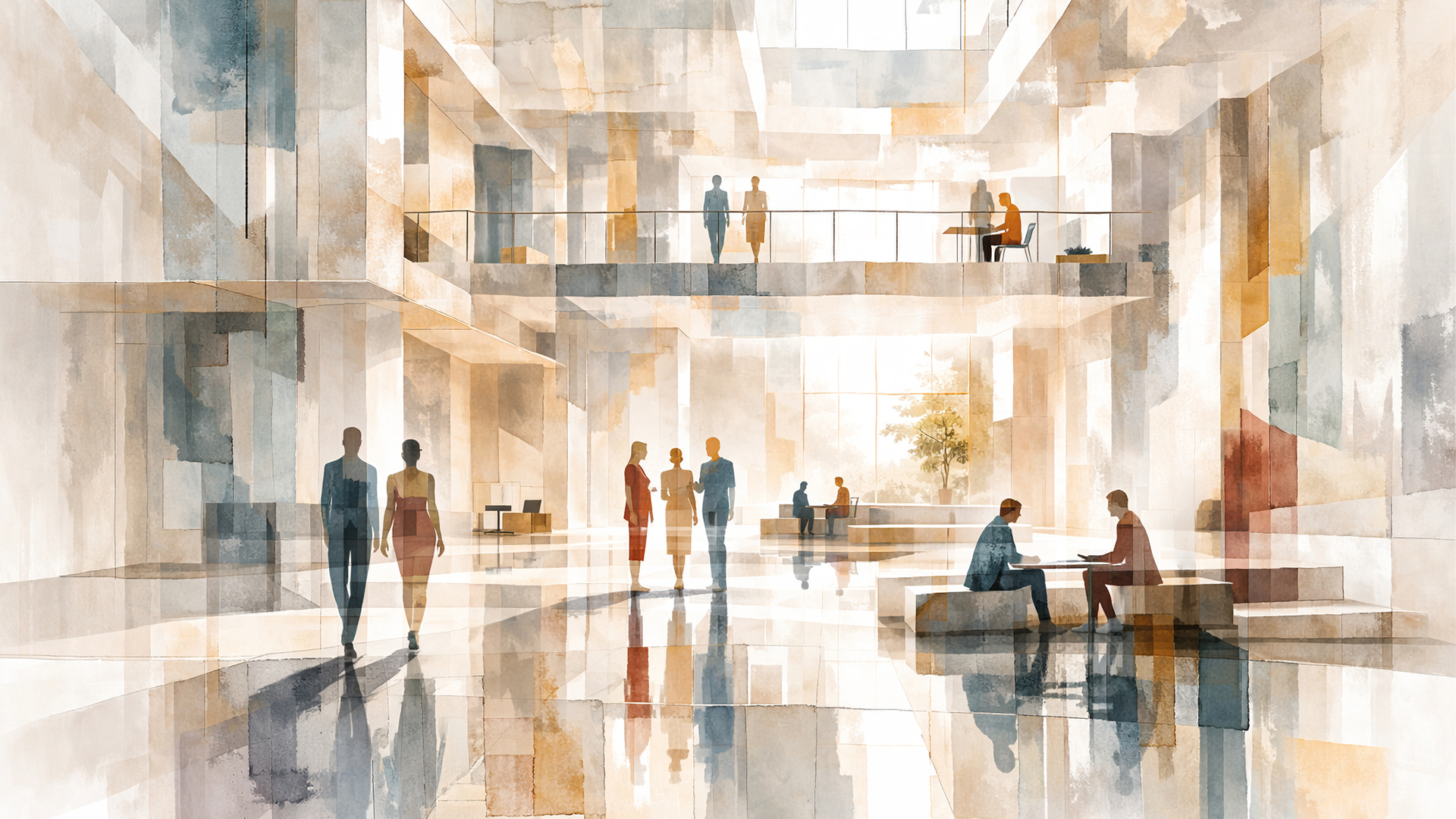

ORGATEC opens its doors tomorrow. What message is Sedus bringing to Cologne this year?
The guiding theme of Sedus at ORGATEC this year is ‘SPACES THAT CARE – Wellbuilding for Human Nature'.
We believe spaces should adapt to people – not the other way around. After all, a space is far more than the sum of its furnishings. It shapes how we feel, how we think, how we collaborate and what we are capable of achieving.
That's why we approach workplace design with people at its heart. Drawing on a deep understanding of human needs, behaviour and different ways of working, we create environments that support both wellbeing and performance.
We call this philosophy “Wellbuilding” – bringing together wellbeing and the design of spaces. It's no longer simply about furnishing a room. It's about creating the right conditions for people to flourish.
You have chosen an exhibition concept that deliberately goes beyond the traditional presentation of individual pieces of furniture. What inspired this approach?
Imagine a symphony. A single note doesn't make music. But when notes form chords, and those chords come together in a carefully orchestrated composition, something truly moving can emerge.
We see workplace design in much the same way. Our products are the individual notes – thoughtfully designed and precisely crafted to support people in different working situations. Together, they form work settings, which in turn become part of a larger spatial composition.
And that composition involves far more than furniture. Colours, materials, textures, tactile qualities, lighting and acoustics all need to work in harmony. It's their interplay that creates atmosphere, identity and a complete spatial experience.
That's exactly what we want visitors to experience at ORGATEC: not simply a collection of individual products, but a curated composition of spaces tailored to people.
Architects often say that spaces tell stories. What story do you want the Sedus Pavilion to tell?
We often talk about the power of space. Because spaces are never just a backdrop. They influence the way we think, feel and behave.
What kind of space sparks creativity? What helps people collaborate effectively, concentrate, unwind or recharge? And sometimes, it's simply about sharing a good cup of coffee and enjoying a moment together.
Spaces can tell us more than a thousand words. They draw us in – and we bring them to life. Through our presence, our activities and our interactions, we shape the spaces around us. And in return, those spaces shape our experiences and behaviour.
The key is to design environments that respond to people's different needs. And that's precisely what we want to achieve at ORGATEC. We don't just want to talk about the power of space. We want people to feel it.
The workplace is undergoing significant change, with demands that can sometimes seem contradictory: greater flexibility, greater efficiency, but also a more human approach. How can workplace design respond?
Perhaps the real challenge is to stop seeing these demands as opposing forces. Wellbeing and performance don't have to come at each other's expense. Under the right conditions, they can actually reinforce one another.
This is exactly where Sedus' concept of Wellbuilding comes in. It explores how the physical, design-related and organisational conditions of a workplace can best support people across different ways of working and living.
Our approach draws on research, collaboration with universities and a systematic understanding of human needs, behaviour and working patterns. But the real value lies in turning that knowledge into practical solutions.
To achieve this, we've developed a comprehensive set of design and planning tools – from colour and material concepts to the analysis of different work activities, carefully coordinated work settings and holistic spatial solutions.
Our aim isn't to strike a compromise between efficiency and humanity, but to create workplaces where the two reinforce each other.
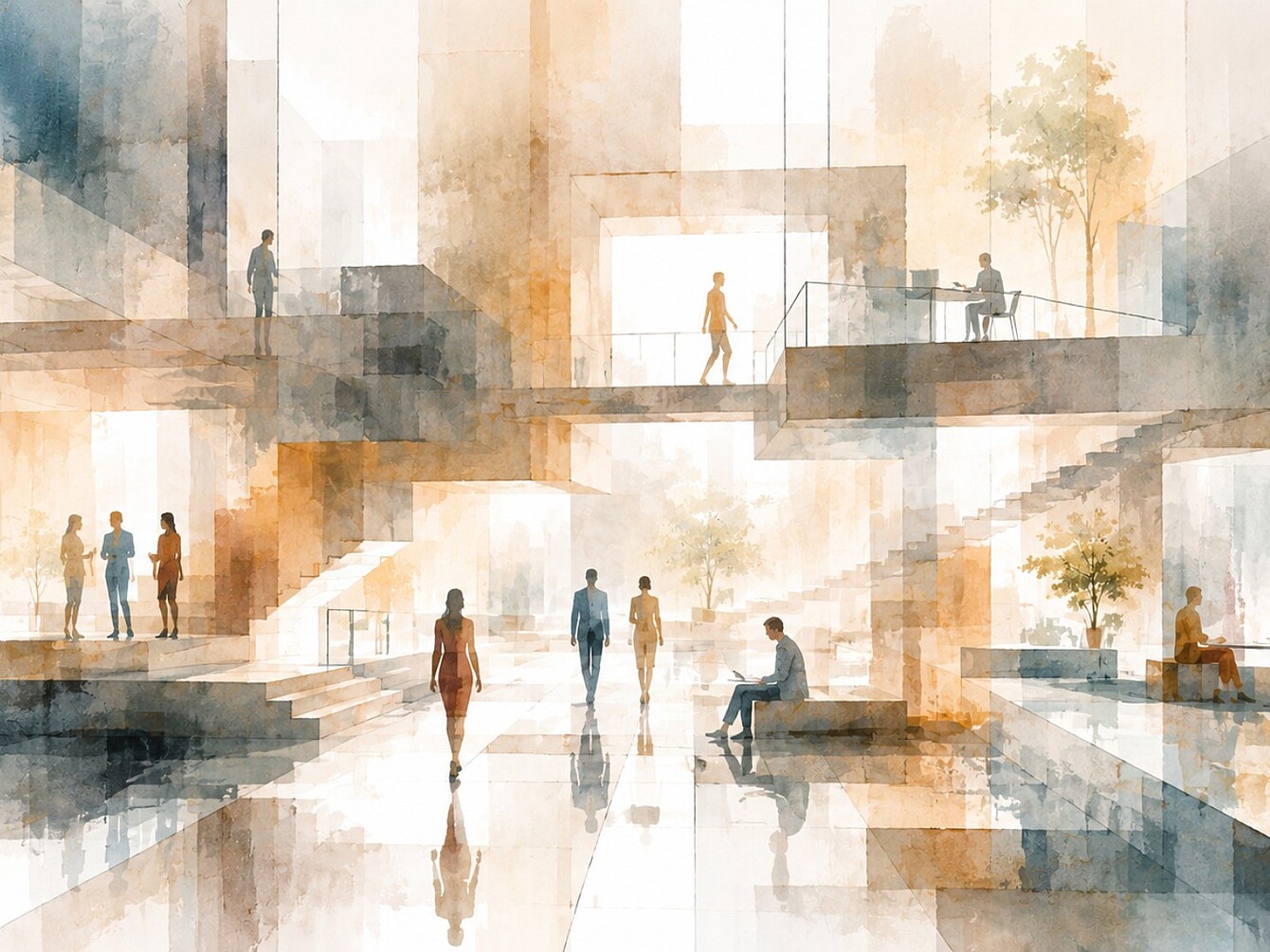
This year, particular emphasis is being placed on the relationship between different workplace areas, or HABITATS. What can you tell us about this new approach?
We usually associate the word “habitat” with biology. It describes a natural environment where a particular combination of conditions creates an ideal setting for certain forms of life. So why shouldn't we apply the same thinking to the workplace?
We see the modern workplace as an ecosystem of interconnected habitats. After all, creativity thrives under different conditions than to those required for focused work, productive collaboration or informal conversation. Each activity calls for its own spatial qualities, atmosphere and design.
With this in mind, we've identified five key HABITATS. Each translates a particular way of working or interacting into a carefully considered environment – bringing together spatial design, colours, materials, lighting and the right work settings.
Just as in a thriving ecosystem, what matters is not simply the individual elements, but how they interact. Rather than just designing spaces for specific activities, we create the conditions that allow people to engage in those activities at their best.
New products are naturally an important part of ORGATEC. What role do this year's innovations play within the overall concept?
Over the past few years, Sedus has evolved from a traditional office furniture manufacturer into a comprehensive provider of workplace solutions and services. This has also changed the way we approach product innovation. What matters isn't how many new products we introduce, but the new possibilities they unlock.
Returning to our symphony analogy, products are the individual notes. To bring all five HABITATS to life in their full diversity, Sedus has strategically refined and expanded its portfolio, filling gaps to create a more complete range of solutions.
The range extends from modular bench seating systems for work cafés, restaurants and informal meeting areas to versatile meeting chairs, compact sofas, new sizes of phone and privacy booths, and a new generation of ergonomic task chairs designed to support healthy, focused work.
Each new product has value in its own right. But its true potential emerges when it works in harmony with the others. The result is a carefully considered portfolio of solutions that gives architects and designers greater freedom to create workplaces tailored to a wide range of needs.
Beyond inspiration, Sedus wants to offer fresh perspectives and practical ideas for workplace planning and design. What would you particularly like architects, designers and decision-makers to take away from their visit?
Ideally, visitors will leave with more than impressions of new products and beautiful spaces. They'll discover fresh perspectives, tangible design ideas and practical tools they can apply to their own projects – from inspiring spatial concepts to planning resources such as the Sedus Colour Cook Book.
But equally important is the exchange of ideas. At Sedus, we research, observe, question and turn insights into practical solutions. Yet some of the most exciting ideas emerge when different experiences, perspectives and disciplines come together.
When architects, designers, clients, decision-makers and dealers start talking, asking questions, sharing experiences and exploring possibilities together, something happens that goes well beyond the exhibition itself.
My hope isn't simply that we inspire others, but that we inspire one another. That knowledge sparks new questions, conversations lead to fresh insights, and those insights become ideas that make our workplaces a little better.
Finally, when visitors leave the Sedus Pavilion, what thought or feeling would you ideally like them to take home?
A good feeling. A sense of joy, optimism and confidence that we have the power to make things better. And perhaps the realisation that good solutions don't always have to be complicated.
The world of work is already complex enough. That's why it's so important to create spaces that offer clarity, foster a sense of ease and empower people to realise their potential.
Sometimes we just have to make things simple. And sometimes we simply have to make things happen.
If visitors leave the Sedus Pavilion feeling inspired, with a smile on their face and a genuine desire to turn ideas into action, then we've achieved something meaningful.
Come and visit Sedus at our stand in Hall 6.1 from 27 to 30 October. We look forward to seeing you there!

social media channels:
